Battery Management System (BMS)
Battery Management System (BMS)
Battery Management System (BMS) | Lithium Battery Protection & Cell Monitoring
A Battery Management System (BMS) is an electronic control system used to monitor, protect, and manage rechargeable battery packs. A properly selected BMS helps protect lithium batteries from conditions such as overcharge, over-discharge, overcurrent, short circuit, and excessive temperature.
Lion Battery provides BMS solutions and battery-pack integration for Li-ion (NMC), LiFePO₄ (LFP), EV batteries, e-bike batteries, solar batteries, ESS, UPS, drones, robotics, and industrial battery packs.
What Is a Battery Management System?
A BMS monitors the electrical and thermal condition of a battery pack and controls or protects the battery according to its design.
Depending on the BMS, it may monitor:
- Individual Cell Voltage
- Total Battery Voltage
- Charging Current
- Discharge Current
- Cell Temperature
- Battery Temperature
- State of Charge (SOC)
- State of Health (SOH)
- Cell Balance
- Fault Conditions
The exact functions depend on the BMS model.
Main Functions of a BMS
1. Overcharge Protection
The BMS can disconnect or control charging when cell voltage reaches the defined protection threshold.
2. Over-Discharge Protection
The BMS can protect cells when their voltage falls below the specified limit.
3. Overcurrent Protection
The BMS can detect excessive current during charging or discharging.
4. Short-Circuit Protection
Many BMS designs provide protection against short-circuit conditions.
5. Temperature Protection
Temperature sensors can monitor battery temperature and help provide protection against abnormal thermal conditions.
6. Cell Balancing
A BMS may include balancing functionality to reduce voltage differences between cells.
7. Battery Monitoring
Smart BMS models can provide information such as voltage, current, temperature, SOC, and fault status.
Types of BMS
| BMS Type | Typical Application |
|---|---|
| NMC BMS | Lithium-ion NMC Batteries |
| LiFePO₄ BMS | LFP Battery Packs |
| Smart BMS | Advanced Battery Monitoring |
| Bluetooth BMS | Mobile Battery Monitoring |
| CAN BMS | EV & Industrial Systems |
| RS485 BMS | ESS & Industrial Applications |
| High-Current BMS | EV & High-Power Battery Packs |
| Passive Balancing BMS | General Lithium Battery Packs |
| Active Balancing BMS | High-Capacity / Multi-Series Packs |
BMS for NMC Batteries
NMC battery packs require a BMS designed specifically for the voltage characteristics and operating limits of NMC cells.
Applications include:
- E-Bikes
- Electric Scooters
- EVs
- Drones
- Robotics
- Portable Power
- Industrial Battery Packs
BMS for LiFePO₄ Batteries
LiFePO₄ battery packs require an appropriate LFP BMS based on the number of cells connected in series.
Common configurations include:
- 4S
- 8S
- 12S
- 13S
- 16S
- 20S
- 24S
The correct BMS depends on the series count, chemistry, current rating, balancing requirements, and application.
Smart BMS
A Smart BMS provides additional monitoring and communication features compared with basic protection BMS units.
Depending on the model, users may monitor:
- Cell Voltages
- Pack Voltage
- Current
- Temperature
- SOC
- Remaining Capacity
- Cycle Information
- Protection Status
- Fault Information
Communication options may include:
- Bluetooth
- CAN
- RS485
- UART
BMS with CAN Communication
CAN-enabled BMS solutions are commonly used in systems that require communication between the battery and another controller.
Potential applications include:
- Electric Vehicles
- ESS
- Industrial Equipment
- Robotics
- Solar Energy Storage
- Battery Management Systems
CAN communication parameters must be compatible with the target controller or system.
BMS with RS485
RS485 communication is commonly used in battery monitoring and energy-storage applications.
It can allow battery information to be exchanged with:
- Inverters
- Energy Management Systems
- Monitoring Systems
- Industrial Controllers
The communication protocol must match the connected equipment.
How to Select the Correct BMS
Before selecting a BMS, check the following:
1. Battery Chemistry
Choose a BMS specifically designed for:
NMC / Li-ion or LiFePO₄ / LFP.
2. Series Count
Determine the number of cells connected in series.
For example:
13S NMC requires a BMS designed for 13-series NMC configuration.
3. Current Rating
Select a BMS according to the battery’s actual continuous and peak current requirements.
4. Balancing
Determine whether passive or active balancing is required.
5. Temperature Sensors
Check how many temperature sensors are required for the battery design.
6. Communication
For smart systems, determine whether you need:
- Bluetooth
- CAN
- RS485
- UART
7. Physical Installation
Check BMS dimensions, connector type, mounting location, and wiring requirements.
BMS Installation
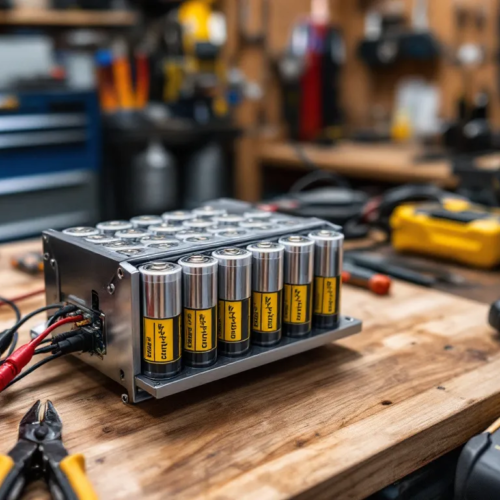
Lion Battery can integrate BMS units into custom lithium battery packs.
The installation process may include:
- Confirming Battery Chemistry
- Confirming Series Configuration
- Selecting the Correct BMS
- Connecting Cell Sense Wires
- Connecting Temperature Sensors
- Connecting Charging / Discharge Wiring
- Configuring Smart BMS Parameters
- Testing Cell Voltages
- Testing Protection Functions
- Final Battery Pack Inspection
BMS wiring should be performed by trained personnel because incorrect connections can damage the BMS or battery cells.
BMS and Active Balancer
A BMS and active balancer are not necessarily the same thing.
| BMS | Active Balancer |
|---|---|
| Battery monitoring | Cell balancing |
| Protection functions | Energy transfer between cells |
| Current monitoring | Voltage equalization |
| Temperature monitoring | Balancing-focused |
| May include passive balancing | Designed for active balancing |
| Smart communication may be available | Model dependent |
Some modern BMS products combine BMS protection, monitoring, and active balancing in one device.
BMS Applications
EV & Mobility
- Electric Cars
- Electric Scooters
- Electric Motorcycles
- Electric Three-Wheelers
- E-Bikes
- Golf Carts
Energy Storage
- Solar Batteries
- ESS
- BESS
- Off-Grid Batteries
- UPS
- Inverter Batteries
Drone & Robotics
- Agricultural Drones
- FPV Drones
- UAV Batteries
- UGV Batteries
- Warehouse Robots
- AGV / AMR Batteries
Industrial
- Telecom Batteries
- Industrial Equipment
- Portable Power
- Medical Equipment
- Backup Power Systems
BMS Testing Services
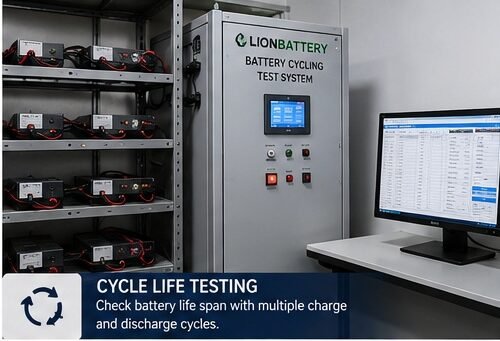
A BMS can be tested as part of battery-pack commissioning or troubleshooting.
Testing may include:
- Cell Voltage Monitoring
- Pack Voltage Measurement
- Current Measurement
- Temperature Sensor Testing
- Cell Balancing
- Overcharge Protection
- Over-Discharge Protection
- Overcurrent Protection
- Short-Circuit Protection
- Communication Testing
Why Choose Lion Battery?
- NMC BMS Solutions
- LiFePO₄ BMS Solutions
- Smart BMS
- CAN BMS
- RS485 BMS
- Bluetooth BMS
- High-Current BMS
- BMS Installation
- BMS Replacement
- Active Balancer Integration
- Custom Battery Pack Design
- Battery Testing
- OEM & ODM Battery Manufacturing
Frequently Asked Questions
What does BMS stand for?
BMS stands for Battery Management System.
What does a BMS do?
A BMS monitors and protects a rechargeable battery pack. Depending on its design, it can monitor cell voltage, current, temperature, balancing, SOC, and fault conditions.
Is a BMS required for lithium batteries?
For most practical lithium battery packs, an appropriate BMS or equivalent battery protection and management system is an important part of the battery design.
Can one BMS work with both NMC and LiFePO₄?
Not necessarily. The BMS must be specifically compatible with the battery chemistry and cell voltage limits.
How do I select a BMS?
Select the BMS based on battery chemistry, series count, continuous and peak current, balancing requirements, temperature sensors, communication requirements, and physical configuration.
Does a BMS increase battery life?
A properly designed and configured BMS can help protect cells from damaging operating conditions and maintain better cell balance, but battery life also depends on cell quality, temperature, charging, discharge conditions, and overall battery design.
Contact Lion Battery
Lion Battery
📞 Phone / WhatsApp: +91-9724991737
📧 Email: info@lionbattery.in
🌐 Website: lionbattery.in
Related Battery Guides
Related Products